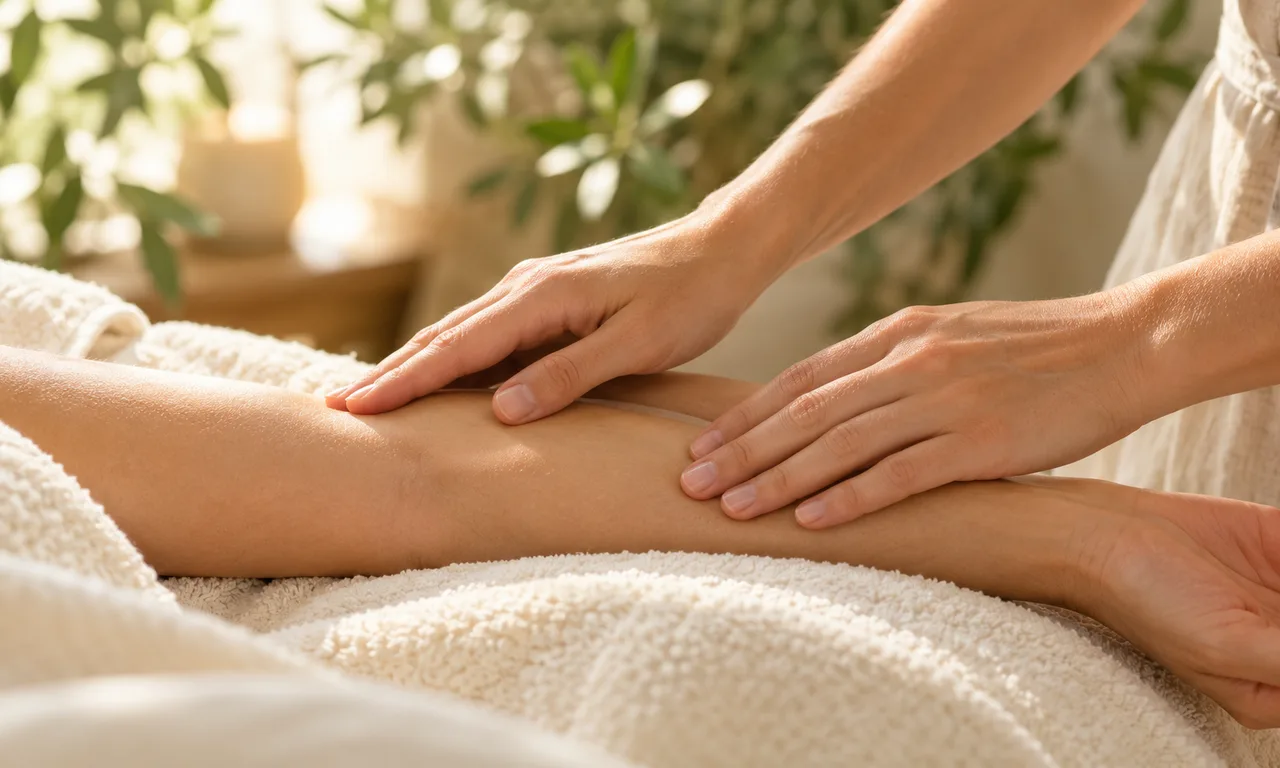
Manual lymph drainage, also called manual lymphatic drainage or MLD, is a specialised light skin-stretching technique. In lymphoedema care it may be one part of a wider management plan. It is not a standalone detox treatment or a guaranteed cure for swelling.
What does manual lymphatic drainage involve?
The lymphatic system helps return tissue fluid to circulation. MLD uses gentle, rhythmic movements directed according to the person’s needs. The Royal Cornwall Hospitals patient leaflet describes the contact as specialised skin stretching, distinct from firm muscle massage.
The sequence is selected in relation to the area being treated and any existing care plan. Gentle contact should feel different from firm muscle massage. A wellbeing visit and specialist lymphoedema management have different aims, so the opening conversation establishes what is appropriate.
From the Vodders to modern lymphatic care
MLD UK traces the approach to Emil and Estrid Vodder’s work in the 1930s. Different schools subsequently developed their own teaching and techniques. History helps explain the name; it does not establish that every modern promotional claim is supported.
Modern lymphatic care uses MLD in defined treatment plans. Postoperative or cancer-related lymphoedema can require specialist care and coordination with the treating team; a private wellbeing session does not replace that plan.
Where MLD sits in lymphoedema treatment
NHS guidance describes decongestive lymphatic therapy as a combination of compression, skin care, exercise and specialised massage. It aims to manage lymphoedema rather than cure it. A maintenance plan is important after an intensive course.
If you have diagnosed lymphoedema, keep your existing team involved. Do not stop prescribed compression or change self-massage sequences because you have booked a private session. Ask how information can be shared and whether an additional visit is appropriate.
What to expect before and during a session
Begin by explaining why you are seeking MLD, where you have noticed swelling and whether it has been assessed. Discuss current treatment, recent procedures, changes in symptoms and comfort when lying down. Keep detailed medical information for a private conversation rather than the public request form.
MLD may involve skin contact and partial undressing of the area being treated. Agree this in advance, including draping, privacy and any support you would like. Contact should feel gentle. The sequence is explained before treatment. Say if contact feels uncomfortable, and request a break at any time.
Expected outcomes and when to seek assessment
Where MLD is appropriate in a specialist plan, the aim may include managing fluid accumulation and tissue discomfort. Outcomes depend on the condition and the other parts of care. A fixed number of sessions does not guarantee a particular reduction in swelling.
New or unexplained swelling needs medical assessment. If a swollen area becomes painful, red or infected, seek advice rather than arranging massage first. Recent surgery and significant medical conditions also need suitability discussions. We do not promise weight loss, immune boosting, cosmetic transformation or “flushing toxins”.
MLD with Dora: time, cost and practical questions
Manual lymph drainage costs £60 for 60–70 minutes. An eight-session package costs £450. A series is an option when suitable for your needs and care plan; the number of visits is individual and progress is reviewed rather than assumed.
Dora’s practice is at 3 Alemoor Crescent, Edinburgh EH7 6UJ. An appointment request starts a conversation; it does not establish clinical suitability or reserve a date. Wear comfortable clothing and allow access to the area being treated. Skin contact, privacy and positioning are explained before treatment; medical details are discussed privately.
Your questions, answered.
Is manual lymph drainage the same as manual lymphatic drainage?
Yes. These names commonly describe the same specialised light-touch technique; MLD is the abbreviation. Different training schools teach particular sequences, while the emphasis remains on gentle rhythmic skin movement.
Is MLD a deep tissue massage?
No. MLD involves gentle rhythmic skin movement and differs from firm pressure aimed at muscles.
Can MLD cure lymphoedema?
No cure is promised. NHS guidance places MLD within a wider management plan that may include compression, skin care and exercise.
Can I request MLD after surgery?
Discuss it with your surgical or lymphoedema team and Dora first. Postoperative suitability, timing and the required specialist training depend on your circumstances.
Is lymphatic drainage a detox or weight-loss treatment?
No. MLD is a specialised light-touch technique, used in lymphoedema care as one part of a wider management plan. It is not a weight-loss treatment, and detoxification or immune-boosting results are not guaranteed.
How many MLD sessions should I request?
The number depends on the reason for treatment, your care plan and your response. One visit can begin the discussion; the eight-session £450 package is available when appropriate, rather than a fixed requirement for everyone.
Can MLD be combined with KCR?
Yes. Dora offers KCR + manual lymph drainage in one 90-minute session at £70, when both approaches are appropriate. Diagnosed lymphoedema, recent surgery or unexplained swelling may require guidance from your treating team before combined care.
Sources & further reading
Sources support the history and evidence discussed here. Practitioner or training organisations describe their own methods; independent clinical guidance is identified separately.
- NHS: lymphoedema treatment
- Royal Cornwall Hospitals: manual lymphatic drainage patient information
- MLD UK: technique and history
Educational information, not an individual medical assessment. Treatment begins with a private conversation about your needs, current care and suitability.
A conversation is a lovely beginning.
Ask about suitability, comfort and what happens next.
View the treatment & pricesRequest a visit