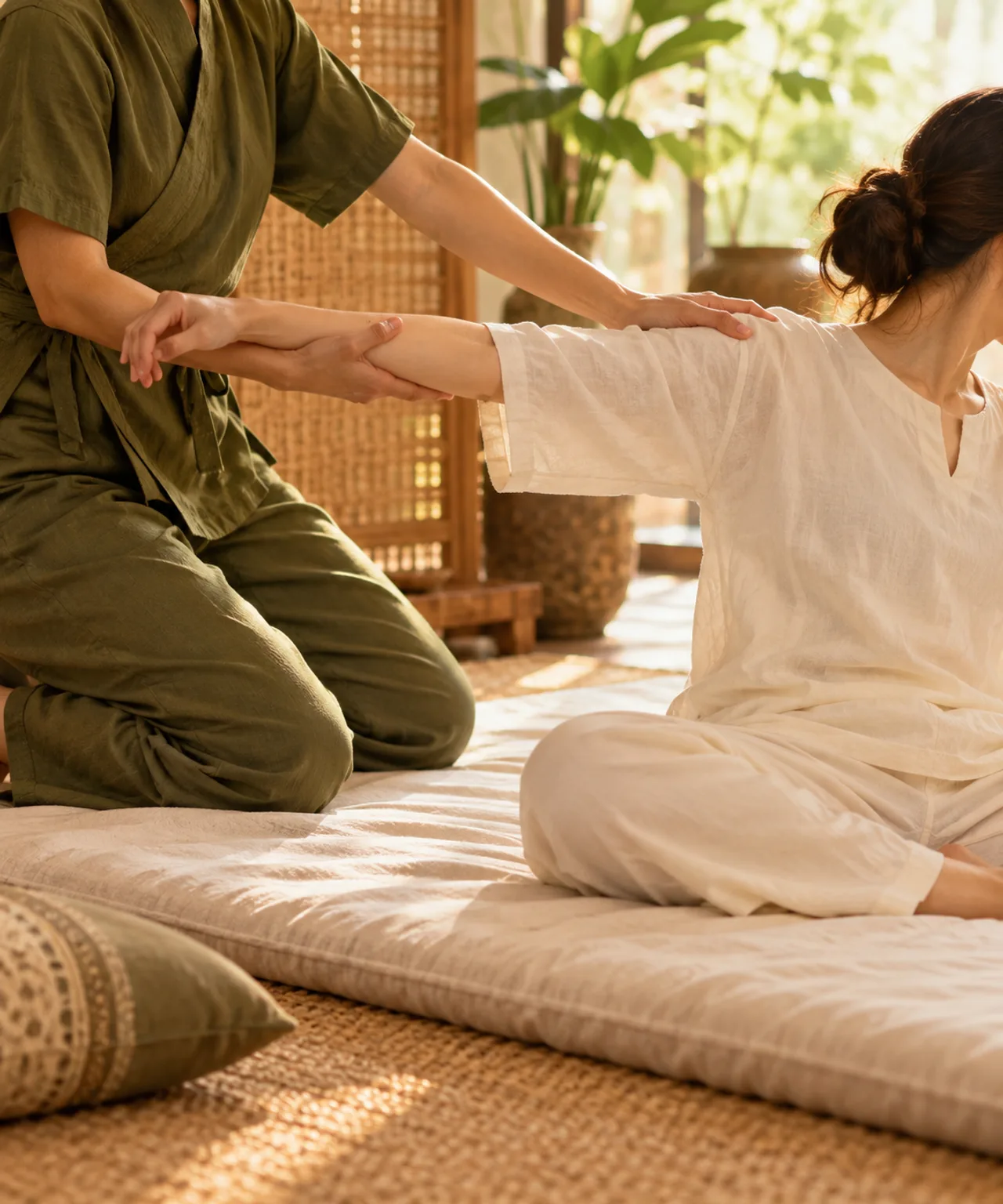
Traditional Thai massage combines hands-on pressure with supported stretches. At this practice it is a clothed treatment in loose clothing. The pace and pressure should be discussed with Dora; you do not need to force a stretch or tolerate pain.
What is traditional Thai massage?
Traditional Thai massage is a movement-based hands-on approach. It is different from imagining yourself lying still through an oil massage: you may change position and be guided through stretches as part of a full body session. Positions and techniques are chosen with your comfort and suitability in mind.
You can take part without trying to impress anyone with flexibility. Describe areas you would prefer to avoid and how you would like pressure to feel. The aim of a visit here is an explained, unhurried experience shaped around your comfort.
A little history of Nuad Thai
UNESCO added Nuad Thai, traditional Thai massage, to its Representative List of the Intangible Cultural Heritage of Humanity in 2019. Its account describes roots in everyday Thai self-care and the sharing of knowledge within communities.
Traditional explanations refer to “sen” and body energy. These belong to the cultural framework of the practice; they should not be presented as a clinically proven anatomical map or evidence that massage cures disease. Respecting the tradition and being clear about medical evidence can sit comfortably together.
Before you arrive
Choose loose trousers and a comfortable top that allow your arms and legs to move. Ask about the surface used for your session, support for your knees or neck, and whether changing positions may be difficult. Allow enough time to arrive without rushing.
Tell Dora about an injury, recent surgery, pregnancy, a condition affecting bones or circulation, or medicines that may affect bruising. Ask your healthcare professional about suitability if you are uncertain. Avoid making assumptions that a traditional technique is appropriate simply because it is described as natural.
During the session: a conversation in movement
Dora explains the contact before it begins and agrees the pace with you. Pressure and supported stretches can be adjusted. Say “lighter”, “smaller movement” or “pause” whenever you need to; a strong sensation is not evidence that a treatment is working better.
A full body Thai massage does not mean every part of your body must be treated. Agree boundaries and areas to avoid. Ask for a different position if you feel uncomfortable, and take a little time to sit up and settle at the end.
Relaxation, muscle tension and realistic outcomes
Massage research describes possible short-term relief for some types of discomfort, but results and study quality vary. Evidence for massage in general does not prove the effect of every Thai technique. A comfortable session may feel restful; relief, increased energy or improved flexibility cannot be guaranteed.
For exercise-related soreness, explain when you trained and what feels different. A sports injury, new severe pain or persistent symptoms deserve appropriate assessment. Discuss how a massage fits around recovery rather than treating it as permission to train through an injury.
Aftercare and booking in Edinburgh
Notice how you feel during ordinary activities over the following day. If the session was too intense, tell Dora before another visit. Seek medical advice for symptoms that concern you; do not explain unexpected pain away as a necessary “healing reaction”.
Full body Thai massage costs £70 for around 90 minutes, with three sessions at £190 and five at £320. Appointments are requested at the Alemoor Crescent practice and agreed personally.
Your questions, answered.
What should I wear for a Thai massage?
Loose, comfortable clothing that allows movement. Traditional Thai massage here is a clothed treatment. Choose a comfortable top and loose trousers, and allow time to arrive without rushing.
Do I need to be flexible?
No particular flexibility target is required to ask about a session. The movements should be adapted to a comfortable range after discussing suitability.
Is Thai massage painful?
Pressure should be discussed and adjusted. You can ask for lighter contact, a smaller stretch or a pause; pain is not a requirement.
Is full body Thai massage the same as sports massage?
They are different descriptions. Thai massage here combines pressure and assisted stretching. The session focuses on a comfortable combination of pressure and movement; it does not include a sports injury diagnosis or rehabilitation programme.
Can I have Thai massage while injured or pregnant?
Tell Dora before arranging a session and ask your healthcare professional about suitability. Techniques may need modification, postponement or avoidance.
How long is a session with Dora?
A session lasts around 90 minutes and costs £70. Three sessions cost £190 and five cost £320. Dora personally confirms the appointment time.
Sources & further reading
Sources support the history and evidence discussed here. Practitioner or training organisations describe their own methods; independent clinical guidance is identified separately.
Educational information, not an individual medical assessment. Treatment begins with a private conversation about your needs, current care and suitability.
A conversation is a lovely beginning.
Ask about suitability, comfort and what happens next.
View the treatment & pricesRequest a visit